What is the best walking route through Istanbul's Old City? Start at the Hippodrome, continue to the Blue Mosque, cross the square to Hagia Sophia, go down into the Basilica Cistern and finish in the Grand Bazaar. Those five stops sit within a compact area of Sultanahmet, about six hundred meters across, and in that order they follow fifteen centuries of history from the Byzantine arena to the Ottoman market. The order is not only about history: it also helps you avoid the longest queues and the closing times of the mosque. It is the route of our private half-day Old City walking tour, and in this guide we walk it stop by stop, with the reasons behind each step and the variations that make sense if you have more or less time.
Why the order matters more than the map
On a map, the Old City looks easy: everything is close, and you could visit the monuments in any sequence. In practice, three things decide the day. Hagia Sophia has the longest line, and it grows during the morning. The Blue Mosque closes to visitors during each of the five daily prayers. And the Grand Bazaar is a place where time disappears. A good route places the mosque between prayers, reaches Hagia Sophia before the crowds peak and leaves the bazaar for the end, when it no longer matters if you stay longer than planned.
Stop one: the Hippodrome, the starting line
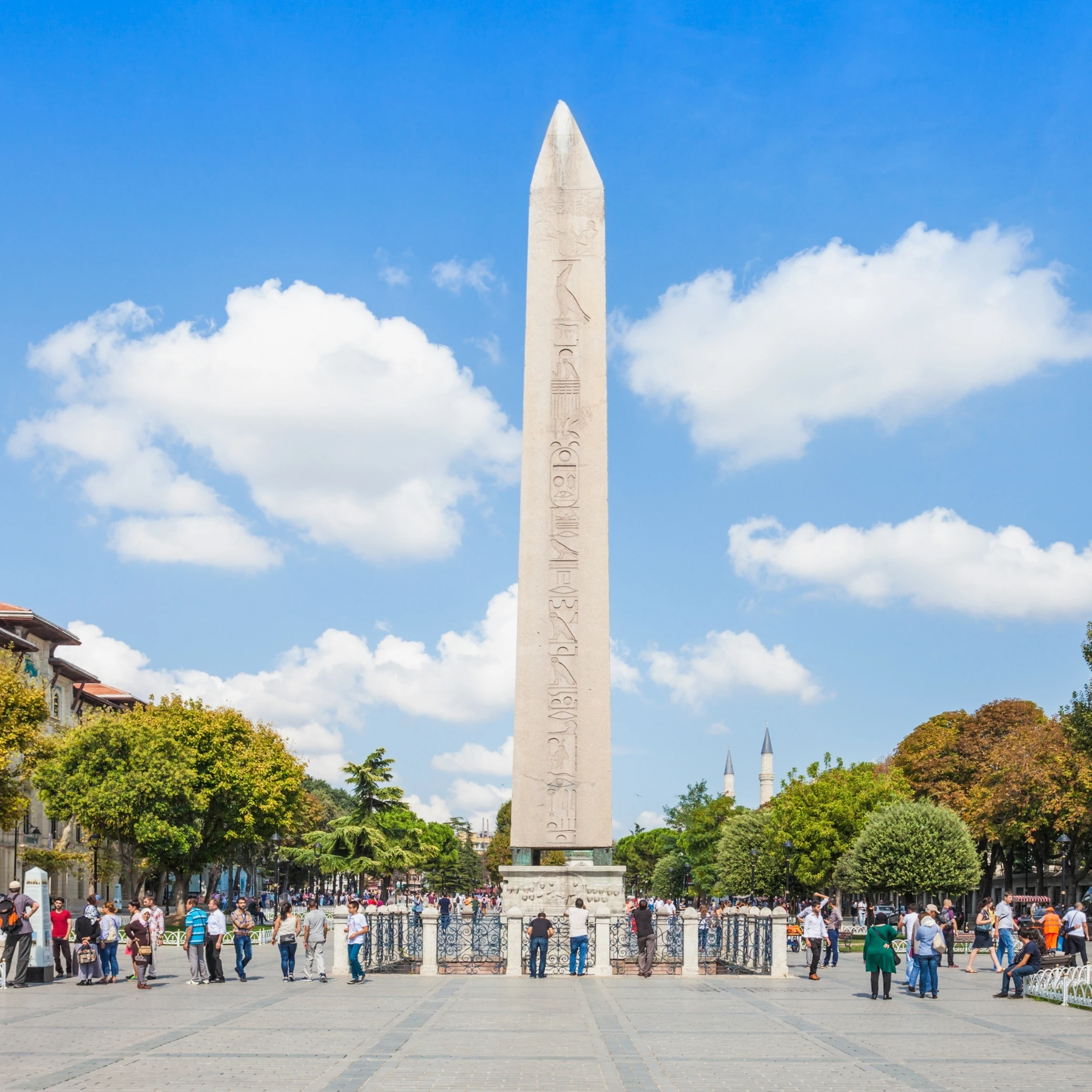
Sultanahmet Square is laid over the old Hippodrome of Constantinople, where the Byzantine emperors raced chariots for more than a thousand years. It is the natural starting point because it is open, free and gives context to everything else. Three monuments survive in a line along the old racetrack: the Obelisk of Theodosius, brought from Egypt in 390, the Serpent Column from Delphi and the Column of Constantine. Fifteen minutes here are enough, and they give you time to check the next prayer time at the mosque a few steps away.
Stop two: the Blue Mosque, between prayers
The Sultanahmet Mosque, built between 1609 and 1616, is the stop that sets the rhythm of the walk. Visitors enter between prayers, with shoulders and knees covered and shoes in hand; women receive a headscarf at the door. Inside, more than twenty thousand İznik tiles give the hall its blue light. Going early in the walk makes it easier to fit the visit into a free window rather than waiting outside.
Stop three: Hagia Sophia, across the square
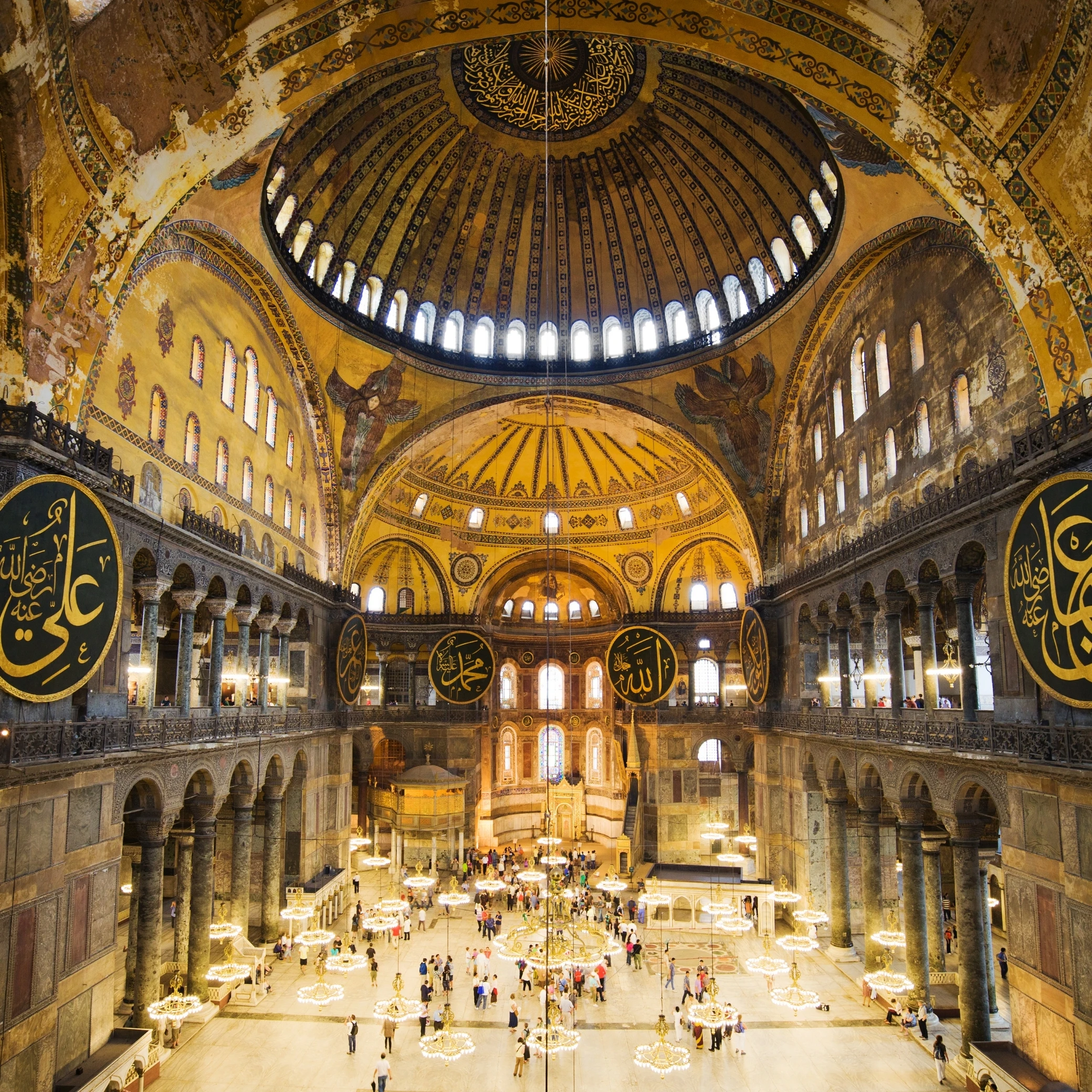
From the mosque, Hagia Sophia is directly across the square. Built for Justinian between 532 and 537 and a mosque again since 2020, it is the visit most travelers come for. Entry is paid at the gate at the official rate of the day, and on busy days an optional Fast Track ticket can save a long wait. Our complete guide to Hagia Sophia explains what to look for inside, from the mosaics to the great dome.
Stop four: the Basilica Cistern, one hundred and fifty meters away
The Basilica Cistern is about one hundred and fifty meters from Hagia Sophia, down a short staircase from street level. Justinian built it in 532 to store water for the Imperial Palace, and today a walkway leads among three hundred and thirty-six reused columns to the two Medusa heads at the far end. The visit takes about twenty minutes and comes at the right moment: after the crowds of Hagia Sophia, the cool underground hall is a welcome pause, especially in summer.
Stop five: the Grand Bazaar, the open ending
The walk ends at the Grand Bazaar, the covered market founded by Mehmed II in 1461, with more than four thousand shops along sixty-one covered streets. Leaving it for last is deliberate: you can spend ten minutes under the painted arches or a whole hour, and the route does not suffer either way. From the bazaar, the streets lead downhill toward the Spice Bazaar and the Golden Horn, which makes it easy to continue the day by the water.
Where to fit Topkapı Palace
Topkapı Palace sits behind Hagia Sophia, a short walk uphill, and it needs real time: four courtyards, the treasury and the terrace over the Bosphorus deserve at least a couple of hours. On a half-day walk it usually does not fit without rushing the rest. If you want it, the best place in the route is right after Hagia Sophia, before the Cistern. That is how the first day of our private 2-day Istanbul tour is organized, as a full day in Sultanahmet with Topkapı at its center.
Walking the Old City from a cruise ship
If you arrive at Galataport, the same route works on a port call, with one difference: everything is timed backwards from the last call on board. On a short call the walk keeps the Hippodrome, the Blue Mosque, Hagia Sophia and the Cistern, and the Grand Bazaar becomes optional. Our private shore excursion from Galataport follows this order with a guide who watches your ship's schedule, picks you up at the terminal and brings you back with a comfortable margin.
Extending the walk beyond Sultanahmet
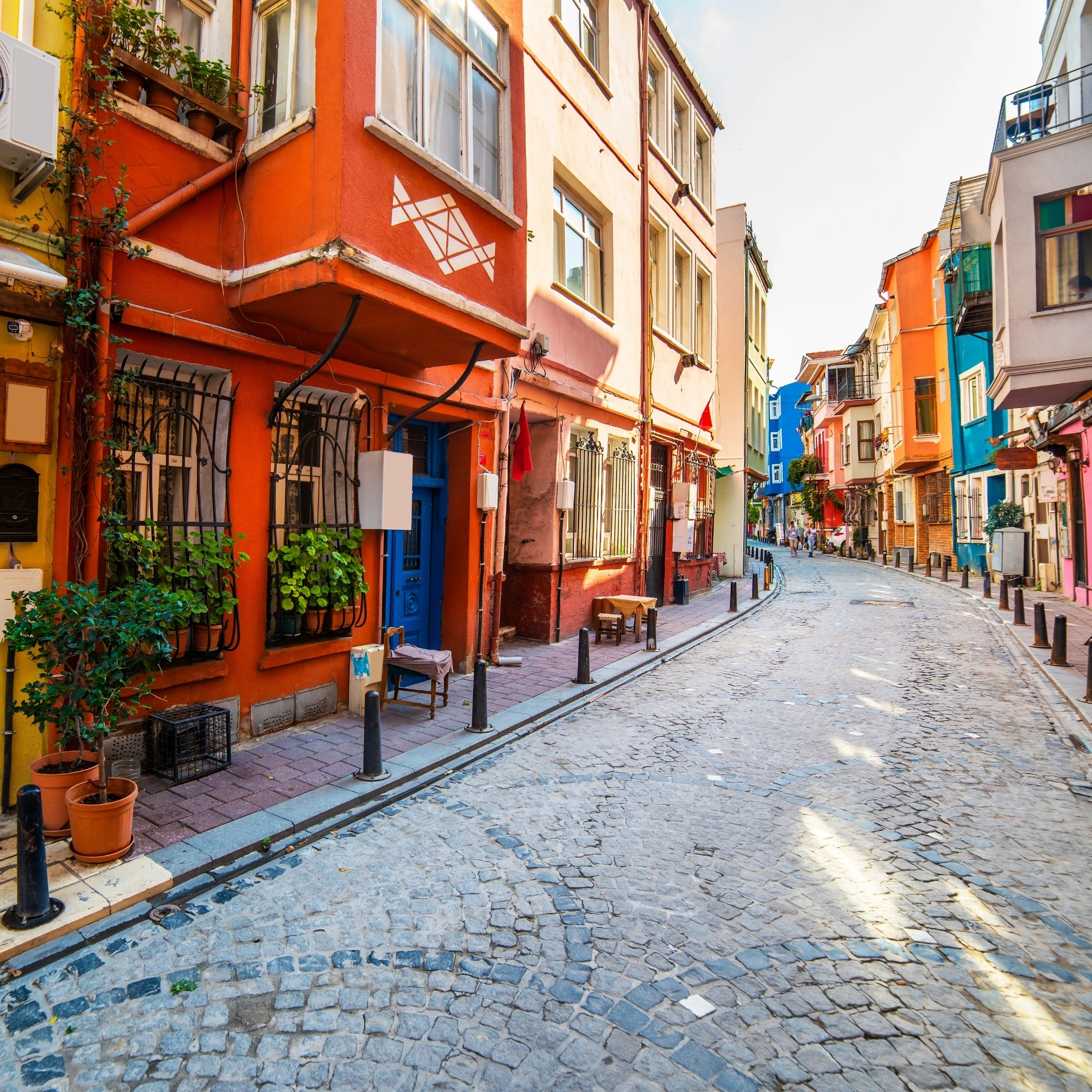
If you have energy left after the Grand Bazaar, the walk continues naturally. From the bazaar you can climb to the Süleymaniye Mosque on the seventh hill, Mimar Sinan's great work, with one of the clearest views over the Golden Horn. From there the streets go down to the Spice Bazaar, built in 1664, and to the piers of Eminönü, where the public Bosphorus boats leave. That second loop is how the second day of our 2-day tour begins, together with the colorful streets of Fener and Balat. Walking both loops in a single day is possible but tiring; most travelers enjoy them more on separate days, with the Old City in the morning of one day and Süleymaniye and the water on the next.
How to get there and where to start
The T1 tram stops in Sultanahmet, a few minutes from the Hippodrome, and from Galataport the old city is about twenty minutes by tram. If your hotel is in Sultanahmet or Taksim, a guide can pick you up; otherwise a good meeting point is the fountain in Sultanahmet Park, between Hagia Sophia and the Blue Mosque. Wear closed, comfortable shoes: the route is on uneven stone and includes stairs inside Hagia Sophia and down into the Cistern.
Frequently asked questions about walking the Old City
How long does the Old City walking route take?
About three to four hours for the five stops at a comfortable pace, or a full day if you add Topkapı Palace.
Can I do the route on my own?
Yes, the streets are easy to follow, but inside Hagia Sophia, Topkapı and the Cistern only licensed official guides may explain.
What is the best time to start?
Early in the morning, so that you reach Hagia Sophia before the longest lines.
Is the route suitable for children?
Yes. The distances are short, and the Cistern and the bazaar are usually the children's favorite stops.
Sources: UNESCO: Historic Areas of Istanbul · Ministry of Culture and Tourism of Türkiye: museums and tickets · GoTürkiye, the official travel guide of Türkiye.
Ready to Explore?
Book your next adventure with Istanbul Private Tours and experience the magic yourself!
Browse Our Tours