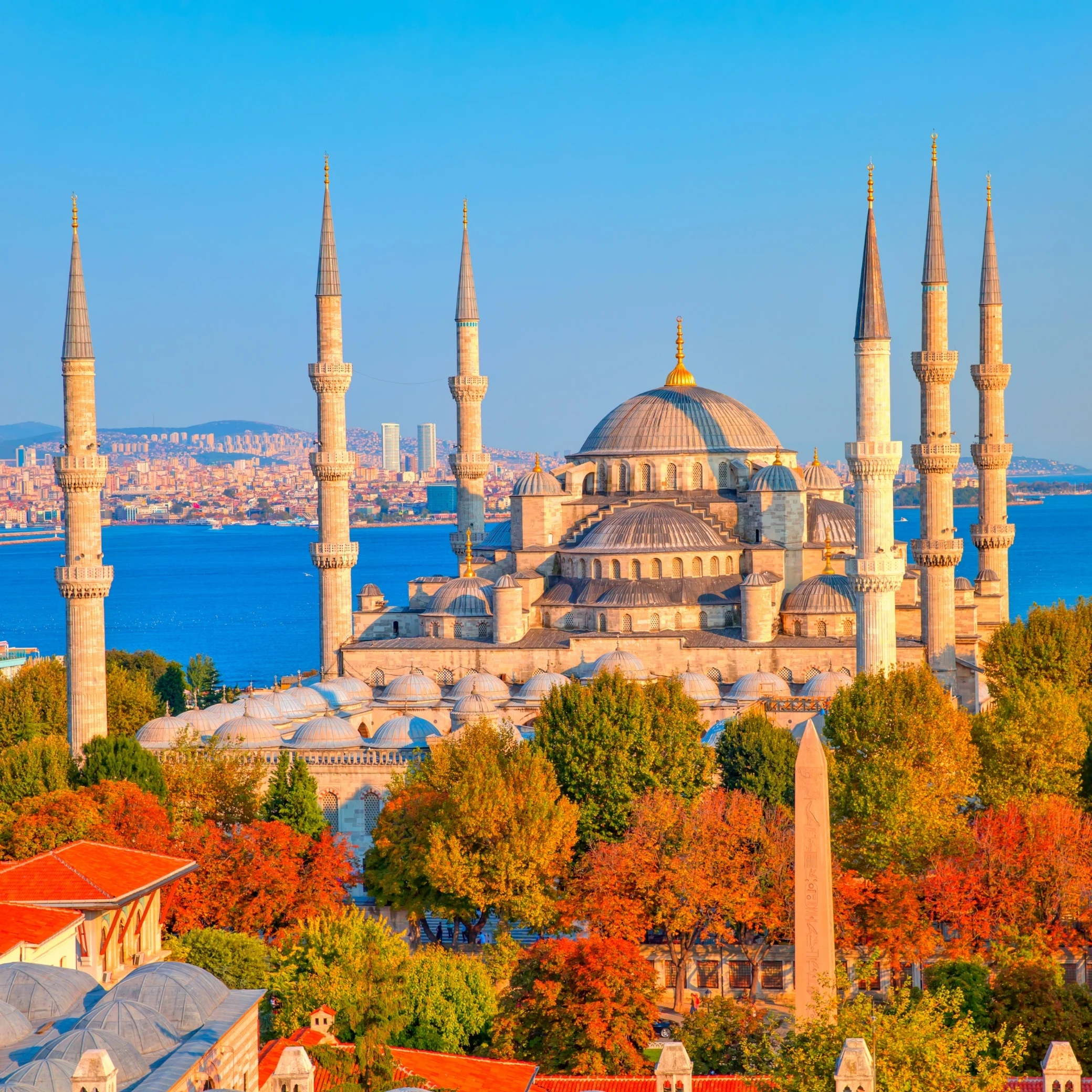
Everything you need to know before visiting Hagia Sophia: history, actual hours, dress code, what to see inside, how to skip the lines and w
## Hagia Sophia: why it's a must in your Istanbul trip
If you only have time to visit one monument in Istanbul, that monument is Hagia Sophia. It's not an opinion: it's a consensus among art historians, architects and licensed guides. Few buildings in the world carry simultaneously such religious, political and artistic weight. It was the largest church in Christianity for almost a thousand years. It was the imperial Ottoman mosque for almost five hundred. It was a museum for eighty-five. And since 2020 it has been a functioning mosque again. All these layers remain visible inside the same building, and that's what makes the visit unique.
This guide is built so you arrive without surprises: with updated hours, dress code, interior route, common mistakes to avoid and how Hagia Sophia fits in your Istanbul itinerary. If you prefer to tour with an English-speaking licensed guide you can [book our half-day old city tour](/en/tours/half-day-old-city-tour), which includes Hagia Sophia along with the Blue Mosque, the Hippodrome and the Basilica Cistern.
## A 1500-year history told in stone and mosaic
The current Hagia Sophia was consecrated in 537 AD by Emperor Justinian I, after a record construction period of five years, ten months and four days according to Byzantine chronicles. It was not the first church on that site: there were two earlier basilicas destroyed by fire. The 31-meter diameter central dome was a technological feat without precedent for the time, and still today impresses by the lightness it conveys thanks to the crown of forty windows around its base.
For almost a thousand years Hagia Sophia was the spiritual heart of the Byzantine Empire and the seat of the Patriarchate of Constantinople. In 1453, when Mehmed II conquered the city, he transformed the church into a mosque in a symbolic ceremony the day after the fall. The following centuries the sultans added the four minarets surrounding the building today, the mihrab oriented to Mecca, the minbar and the large calligraphic medallions hanging from the ceiling with the names of Allah, Muhammad and the first caliphs.
In 1934 Atatürk signed the decree that converted Hagia Sophia into a museum, open to worshipers and tourists of all religions without distinction. For eighty-five years it worked that way. In July 2020 the Turkish Council of State revoked that decree and Hagia Sophia became a functioning mosque again. Tourist access remains open but with changes in hours and rules, which we detail below.
## Current hours and how to avoid the lines
Hagia Sophia opens to tourism every day of the year, but with interruptions for the five daily Muslim prayers. The practical schedule for visitors in 2026 is approximately: 09:00 to 17:00 in winter and 09:00 to 19:00 in summer, with closures of about forty-five minutes during midday (Zuhr prayer) and forty-five minutes to one hour during the afternoon prayer (Asr). On Fridays the midday prayer closure extends to almost two hours (Cuma namazı, sermon included) between 12:30 and 14:00 approximately. This is relevant because many people arrive right at that hour and discover the monument is closed.
The longest lines form between 11:00 and 14:00. If you want to enter without waiting, arrive before 09:30 or after 15:30. Remember Istanbul's historic core (Sultanahmet) is pedestrianized in its central sections, so walking from the Blue Mosque or from the Hippodrome square is the most comfortable. If you come by public transport, the Sultanahmet tram stop (T1 line) is three minutes on foot.
Tourist entry: there is an entry fee for foreign visitors (exact price confirmation changes each season, better verify the day before). Turkish citizens and practicing Muslims enter without cost through the area designated for prayer. Children under six years also enter without cost.
## What you'll see inside: interior route
As soon as you cross the outer threshold, you find yourself in the narthex, a long gallery decorated with golden mosaic vaults. Before entering the main nave, look up at the imperial door (the central one, the largest): above it is one of the most famous Byzantine mosaics in the world, the one of Christ Pantocrator blessing Emperor Leo VI. It's from the 9th century and most visitors pass beneath it without looking up.
You enter the main space and the first reaction is always the same: head up. The central dome seems to float. Light enters through the forty windows at the base and creates the sensation that the ceiling is suspended in the air. This sensation is intentional: the Byzantine architects Anthemius of Tralles and Isidore of Miletus designed it exactly so to evoke the divine. Remember when it opened in 537 nothing similar existed in the world, and Justinian according to legend cried out "Solomon, I have surpassed you" referring to the Temple of Jerusalem.
Look at the four large green medallions with golden calligraphy hanging next to the central pillars. They are from the 19th century and bear the names of Allah, Muhammad and the four first caliphs in Arabic script. They are the largest calligraphic discs in the Islamic world.
The mihrab, the niche indicating the direction of Mecca, is slightly displaced from the building's central axis because the orientation of the Byzantine church (towards Jerusalem) does not match the direction of Mecca. It's one of the details people don't notice at first glance but the licensed guide points out.
In the upper gallery (second floor) are the best-preserved Byzantine mosaics: the Deesis (Christ between Mary and John the Baptist, 13th century, considered one of the masterpieces of late Byzantine art), the mosaic of Empress Zoe and Constantine IX, and the imperial procession of Comnenus. These mosaics are partially covered with curtains during prayers out of respect for Islamic worship, but the rest of the time they are visible.
Don't miss the weeping column near the northwest entrance: a stone column with a hole in the center where tradition says wishes come true if you put your thumb inside and make a complete turn. Tourist gimmick but part of the monument's folklore.
## Dress code: what to wear and what not
Hagia Sophia is now a functioning mosque, so the dress code is strict and enforced at the entrance. Shoulders and knees covered for all. Women must cover their hair with a scarf (one is provided disposable at the door if you don't bring one). Avoid shorts, skirts above the knee, sleeveless tops and pronounced necklines. Shoes are removed before entering the main prayer area, so bring clean socks. Plastic bags are provided to carry your shoes with you. The floor is carpeted in the prayer area and cold surfaces in the rest.
Photography: allowed without flash and without tripod. Professional cameras with telephoto may require special permission. Selfies with selfie stick are not allowed during prayer. Speak softly at all times, especially during prayers.
## How to get to Hagia Sophia and the surroundings
Hagia Sophia is in Sultanahmet square, Istanbul's historic heart, facing the Blue Mosque (one hundred meters) and three minutes on foot from the Basilica Cistern. The most comfortable access from Taksim or the airport is by T1 tram (Sultanahmet stop), by taxi or by private transfer. If you stay in Sultanahmet you're already walking. If you stay in Taksim, Galata or the Asian side, calculate between fifteen and thirty minutes by taxi depending on traffic.
The surroundings justify a full day. Basilica Cistern (five minutes on foot, part of the Byzantine route), Topkapı Palace (seven minutes on foot, residence of the sultans), Hippodrome of Constantinople (in front of Hagia Sophia, with its three ancient obelisks), Sokollu Mehmed Paşa Mosque (perfect example of Sinanic architecture less touristy), Spice Bazaar (Mısır Çarşısı, fifteen minutes on foot down the slope to Eminönü) and Grand Bazaar (Kapalı Çarşı, twelve minutes on foot through historic alleys).
## Hagia Sophia in your itinerary: how much time to give it
The strict Hagia Sophia visit lasts between forty-five minutes and one hour without a guide. With a licensed guide explaining the mosaics, Byzantine and Ottoman history and the building's layers, a reasonable visit is one hour fifteen to one and a half hours. If you spend less than forty minutes you're left with the shell of the monument.
The classic combination for a first day in Istanbul is: Blue Mosque + Hagia Sophia + Basilica Cistern + Hippodrome + optional Topkapı Palace. This fits in five to six hours at good pace with coffee breaks. That's exactly the logic of our [private half-day old city tour](/en/tours/half-day-old-city-tour) with an English-speaking licensed guide.
If you come to Istanbul for several days, Hagia Sophia usually fits in the first day as an introduction to the Byzantine period. The second day is dedicated to the Bosphorus and alternative neighborhoods, and the third to the Bazaar, the Asian side or special experiences. That's the logic of our [two-day](/en/tours/istanbul-highlights-2-days) and [three-day](/en/tours/istanbul-highlights-3-days) itineraries, designed to make the most of each day without burnout.
## Common mistakes a licensed guide saves you
Arriving just before midday prayer and discovering the monument closes for an hour. Visiting the narthex without looking up at the imperial mosaic of Christ and Leo VI. Walking under the calligraphic discs without understanding they are from the 19th century and not contemporary to the building. Not climbing to the upper gallery and missing the best-preserved Byzantine mosaics (the most impressive of the route). Confusing the mihrab with a detail of the original Christian altar. Not noticing the slight tilt of the mihrab relative to the building's axis. Staying forty minutes when a decent visit needs an hour.
## Book our private tour with English-speaking guide
We are Alfombra Voladora Travel, Turkish travel agency registered in TÜRSAB under license A-9759. We operate under the brand Istanbul Private Tours for the international segment, with licensed guides from the Turkish Ministry of Culture and private cars with professional driver. Three tours include Hagia Sophia with detailed explanation: the [Half Day Old City Tour](/en/tours/half-day-old-city-tour) (approx 60 USD per person), the [Istanbul Highlights 2-Day](/en/tours/istanbul-highlights-2-days) and the [Istanbul Highlights 3-Day](/en/tours/istanbul-highlights-3-days). Book via WhatsApp (+90 546 559 25 00) or email (info@istanbulprivatetours.com) with at least 24 hours notice.
A good next step for your trip: after Istanbul, discover Cappadocia, the two jewels of Turkey on a single route.