Not another monument list: the real strategy to order Istanbul by queues rather than by map, decide between two or three days, dodge prayer-time closures and know exactly what a guide adds and what you can do alone.
## Two days or three? The right question before you pack
The internet is full of Istanbul itineraries that are monument lists split across days, as if the city were a multiple-choice exam. This guide is something else: it is the strategy we apply every week with real travelers, with the queues, the prayer times and the fatigue built into the equation. Let us start with the mother decision: are two days enough?
Honest answer: with two full, well-ordered days you cover imperial Istanbul (all of Sultanahmet), the bazaars and the Galata hill with Karaköy. What you sacrifice is the water and Asia: the Bosphorus sailed without hurry and the Asian shore. The third day does not add "more mosques": it adds the dimension that turns sightseeing into understanding, because Istanbul without its strait is half a city. If you can choose, choose three. If you cannot, the two days below are engineered to be squeezed dry: that is exactly the logic behind our [2-day Istanbul Highlights](/en/tours/istanbul-highlights-2-days) versus the [3-day version](/en/tours/istanbul-highlights-3-days).
## Mistake number one: ordering your itinerary by map instead of by queues
Nearly every itinerary in circulation orders the visits by geographic proximity. It looks logical and it is the single biggest hour-burner in Istanbul. The variable that rules is not distance: it is queue dynamics. Hagia Sophia and Topkapı open with short lines that multiply by five between 10:30 and 11:00, when the cruise and bus groups unload. The Basilica Cistern, by contrast, swallows crowds fast and its line shrinks after 4 pm.
The sequence that works, tested hundreds of times: the highest-demand monument at 8:30-9:00 sharp (Hagia Sophia or Topkapı depending on the day), the second giant right after, the Blue Mosque in the midday window between prayers, and the Cistern as the afternoon wildcard. Whoever orders by map sees three things and queues for two hours; whoever orders by queues sees five and barely waits. It is the cheapest upgrade of the whole trip: it costs zero euros and is paid for by your alarm clock.
## Day 1: Sultanahmet with a plan
The first day belongs to the historic peninsula, and it starts early: at the first gate by 8:30. The morning chains Hagia Sophia (a long hour; the upper gallery with the mosaics is what people skip and should not) and Topkapı Palace with the Harem included (two and a half hours; the Harem is a separate ticket and half the value of the visit). Lunch outside the square's radius — ten minutes on foot change both the price and the cooking, as we explain in our food guide — and in the afternoon, the between-prayers window for the Blue Mosque, the Hippodrome with its obelisks, and the Basilica Cistern to close underground among sixth-century columns.
The closing trick almost nobody uses: at the end of the day, Gülhane Park — the old palace gardens — hands you the best light of the day over Seraglio Point, free and queue-less. A twelve-kilometer walking day: dinner near the hotel and early to bed, because day two starts early as well.
## Day 2: from the Grand Bazaar to the Galata hill
The second day crosses from empire to commerce. Start at the Grand Bazaar at 9:00, when the merchants open and the 4,000-shop labyrinth still breathes: an hour's wander with some bargaining included is plenty for first contact. From there, downhill through the craftsmen's streets to the Spice Bazaar and the New Mosque at Eminönü, with the Golden Horn now in front of you.
The afternoon crosses Galata Bridge — fishermen above, seafood below — and climbs the hill to Galata Tower, the Kamondo Stairs and the cafés of Karaköy, the exact walk we unpack in our tower-and-neighborhood guide. If your legs still answer, İstiklal Street up to Taksim on the nostalgic tram closes the full arc: from day one's Roman obelisks to the 19th-century avenue in forty-eight hours. With two days, the film ends here; the honest summary is that you saw the essentials and you leave wanting to return.
## The third day: the Bosphorus and the Asian decision
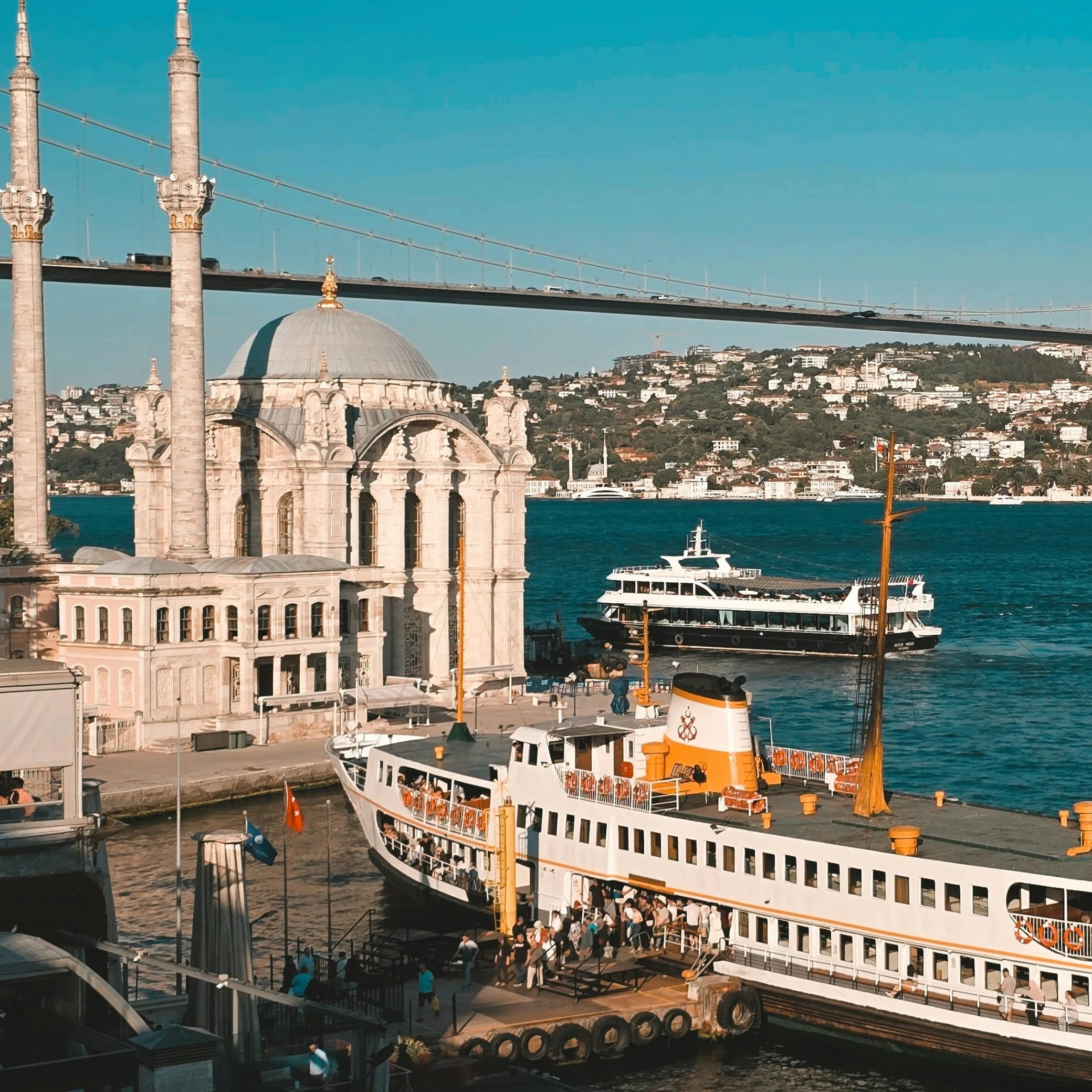
Day three is the reward. In the morning, sail: the strait with its palaces, fortresses and yalı mansions only makes sense from the water, and in private format the boat moves at your pace and your light — our [two-hour private yacht](/en/tours/bosphorus-yacht-discovery) exists precisely for this. The full comparison of ferry versus tourist boat versus yacht lives in our Bosphorus guide; the short version is that the third morning is the perfect slot for a boat deck.
The afternoon crosses to Asia. Kadıköy and its market to eat the way the city eats, the Moda neighborhood for coffee over the Marmara, and the ferry back at sunset with the old city skyline lighting up off the bow: the cheapest and most memorable trip finale in existence, for the price of a transit token. The traveler who owns this full third day is exactly who we designed the [3-day itinerary](/en/tours/istanbul-highlights-3-days) for.
## Prayer times and other calendar landmines
Here is the information that saves the most heartbreak. Active mosques — the Blue Mosque, Süleymaniye, Rüstem Paşa — close to tourism for some 30-45 minutes around each of the five daily prayers, and Friday noon is the big one: the Blue Mosque can stay closed to visits from mid-morning into early afternoon. The times shift daily with the sun; any prayer-times app gives you the exact schedule for your date.
More calendar landmines: Topkapı closes on Tuesdays, so days one and two swap order if your visit falls on one. Hagia Sophia restricts tourist access on major religious holidays. And during Ramadan the monuments run normally but the city's rhythm changes: slower bazaars by day, an explosion of life at dusk. None of this ruins a trip when known in advance; all of it does when discovered in front of a locked door.
## What a private guide changes (and what you can perfectly do alone)
Let us be transparent, even though we sell guided tours. You can do alone, no problem: the bazaars, the Galata-Karaköy walk, the Asian afternoon and any mosque outside peak windows. Where a private guide changes the film: inside Topkapı and Hagia Sophia (without context they are beautiful buildings; with context they are eight hundred years of power explained on the stones), in managing queues and prayer windows in real time, and on days with children, where turning the visit into a story is the difference between a happy family and a mutiny at 11 am.
Our format on the [2-day](/en/tours/istanbul-highlights-2-days) and [3-day](/en/tours/istanbul-highlights-3-days) itineraries is purely private: your group, your pace, a state-licensed guide and a vehicle where distances call for one. The military morning of Sultanahmet runs on this guide's anti-queue strategy; the afternoon bends to whatever the group asks, because it is your trip, not ours.
## Where to stay for this itinerary: Sultanahmet or Galata
Inevitable question, short answer. Sultanahmet: monuments on foot, dawns with the Blue Mosque to yourself, but a neighborhood that switches off at night and cooks for tourists. Galata-Karaköy: the best base for food and atmosphere, one tram ride from the monuments. For a first two-day visit, Sultanahmet wins on pure logistics: every minute counts and sleeping three hundred meters from the morning's first queue is a tactical advantage. For three days or a second visit, Galata gives you better evenings.
And one logistics note that connects to the start of your trip: whichever of the two airports you land at, a [flight-tracked private transfer](/en/tours/private-transfer-istanbul-airport) settles the itinerary from the baggage belt onward; the full airport comparison lives in our transfers guide.
## Quick questions about the itinerary
**Is the museum pass worth it?** If you will enter Topkapı with the Harem plus two or three more museums, the math usually works; for Hagia Sophia and the Cistern alone, it does not. Run the sum on your actual list.
**Should tickets be bought online?** Topkapı and the Cistern, yes, and in advance in high season. The real advantage is not the price: it is skipping the box-office line, which is half the wait.
**Is Istanbul walkable or do I need transport?** Sultanahmet is 100% on foot. For the rest: the T1 tram, the funiculars and the ferries cover this whole itinerary with one Istanbulkart; a car only pays off with children, extreme heat or Bosphorus dinner crossings.
**Is it safe to walk at night?** In the areas of this itinerary, yes, with the standard prudence of any large European city: Sultanahmet and Galata-Karaköy at night are calm and watched.
**How much daily budget beyond the hotel?** A heavy day's tickets (Topkapı plus Harem plus Cistern) plus two local meals and transport fit a moderate European budget; what blows it up is not the monuments, it is tourist dinners with a view.
**What if I only have one day (layover or cruise)?** The compressed version exists: Sultanahmet's military morning plus the Grand Bazaar. That is exactly our [half-day tour](/en/tours/half-day-old-city-tour) extended, and for cruise passengers the [Galataport shore excursion](/en/tours/istanbul-shore-excursion-galataport) with ship schedules guaranteed.
## The itinerary is the map; the order is the treasure
Anyone can list Hagia Sophia, Topkapı and the Blue Mosque; the difference between an exhausting trip and a round one lies in the order, the hours and the closures nobody told you about. Alfombra Voladora Travel — a Turkish agency, TÜRSAB A-9759, behind the Istanbul Private Tours brand — ships that strategy built into its private [2-day](/en/tours/istanbul-highlights-2-days) and [3-day](/en/tours/istanbul-highlights-3-days) itineraries. Send us your dates on WhatsApp (+90 546 559 25 00) or at info@istanbulprivatetours.com and we will tell you, no strings attached, exactly which order suits your days.
And if you want to go beyond the city, a great idea is to combine Istanbul with Cappadocia on the same trip.